Freshworks · 2023–2024
Improving MQC-to-SAL conversion by 40% through brand-to-demand
Using LinkedIn to connect category exposure, retargeting and high-intent offers into a measurable demand journey.
Audience strategy · LinkedIn · Sequencing · Measurement
01
The business tension
Brand investment is often judged by direct lead capture even when buyers encounter a brand before converting through search, events or other demand channels. That bias makes upper-funnel work look ornamental and lower-funnel channels look self-sufficient.
The challenge was to determine whether LinkedIn exposure improved the downstream performance of the wider demand system.
02
What I saw
Analysis of opportunity journeys showed that direct attribution captured only a small part of LinkedIn’s contribution. Prospects exposed to brand and category messaging before conversion often moved differently through the channels that eventually received credit.
The more useful question was not ‘How many leads did LinkedIn generate?’ but ‘Did earlier exposure improve conversion and velocity elsewhere?’
03
The strategic choice
I framed LinkedIn as an orchestration layer between brand and demand, not as a standalone lead vendor.
Upper-funnel creative established the category problem and customer proof; lower-funnel creative introduced reports, benchmarks, webinars and conversion offers; retargeting sequenced the two.
04
The operating model
Opportunity journeys, exposure patterns, conversion and velocity.
Category-level creative connected to solution proof and high-intent offers.
Qualified reach, cross-funnel sequencing, retargeting and channel coordination.
Optimization based on contribution to the entire journey, not only form fills.
05
Activation
- Connected upper- and lower-funnel campaigns so demand capture landed in the context of an already established problem and point of view.
- Built retargeting paths for engaged and high-fit audiences, moving them toward evidence, events, demos and trials.
- Used the findings to inform creative, format, sequencing and spend decisions across the wider campaign portfolio.
Selected evidence
How brand became demand
1. Design the audience journey
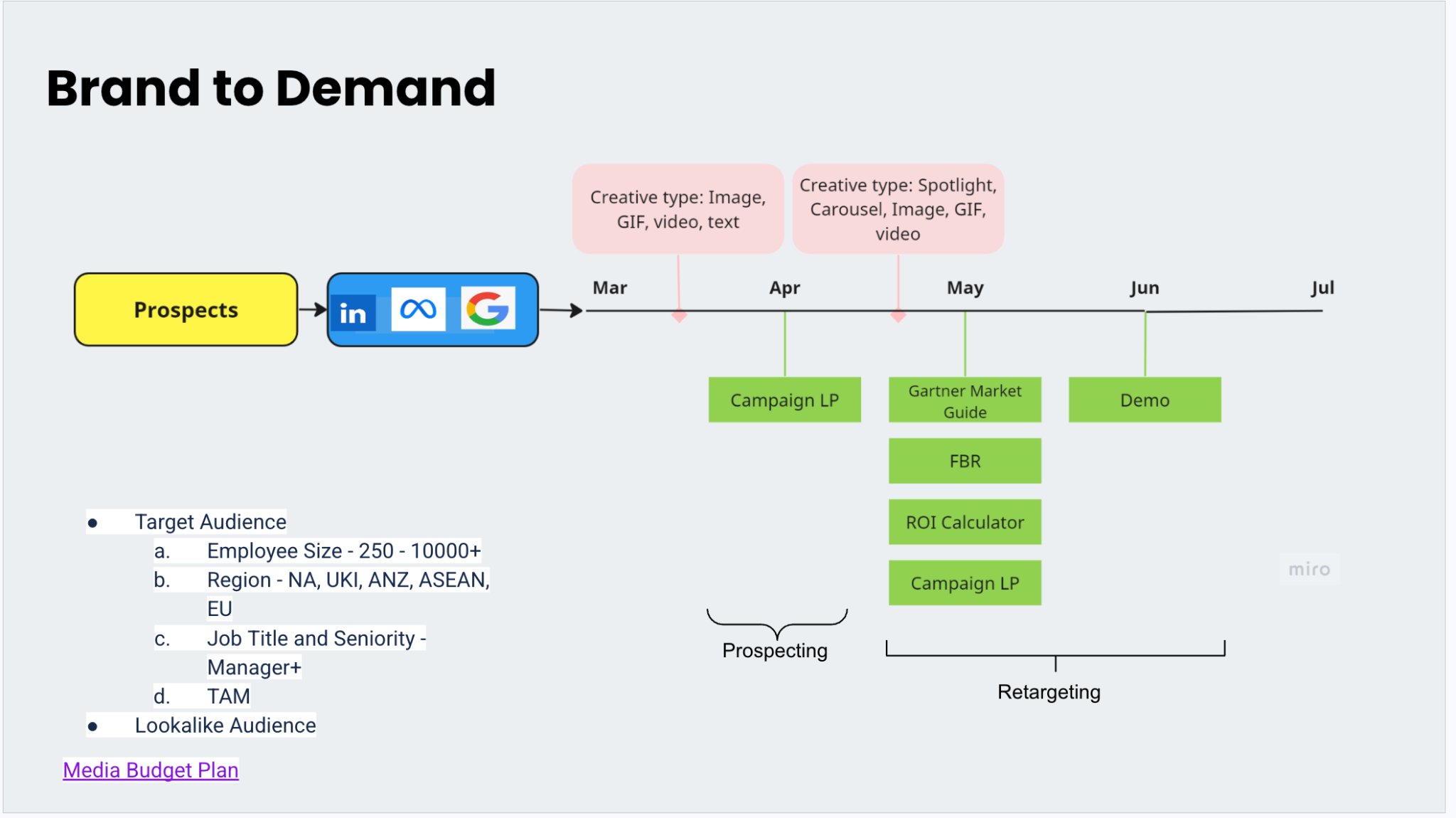
The targeting framework defined the ICP, seniority, regions and lookalike audiences, then sequenced prospecting and retargeting across channels, creative formats and conversion offers.
2. Build familiarity before the ask
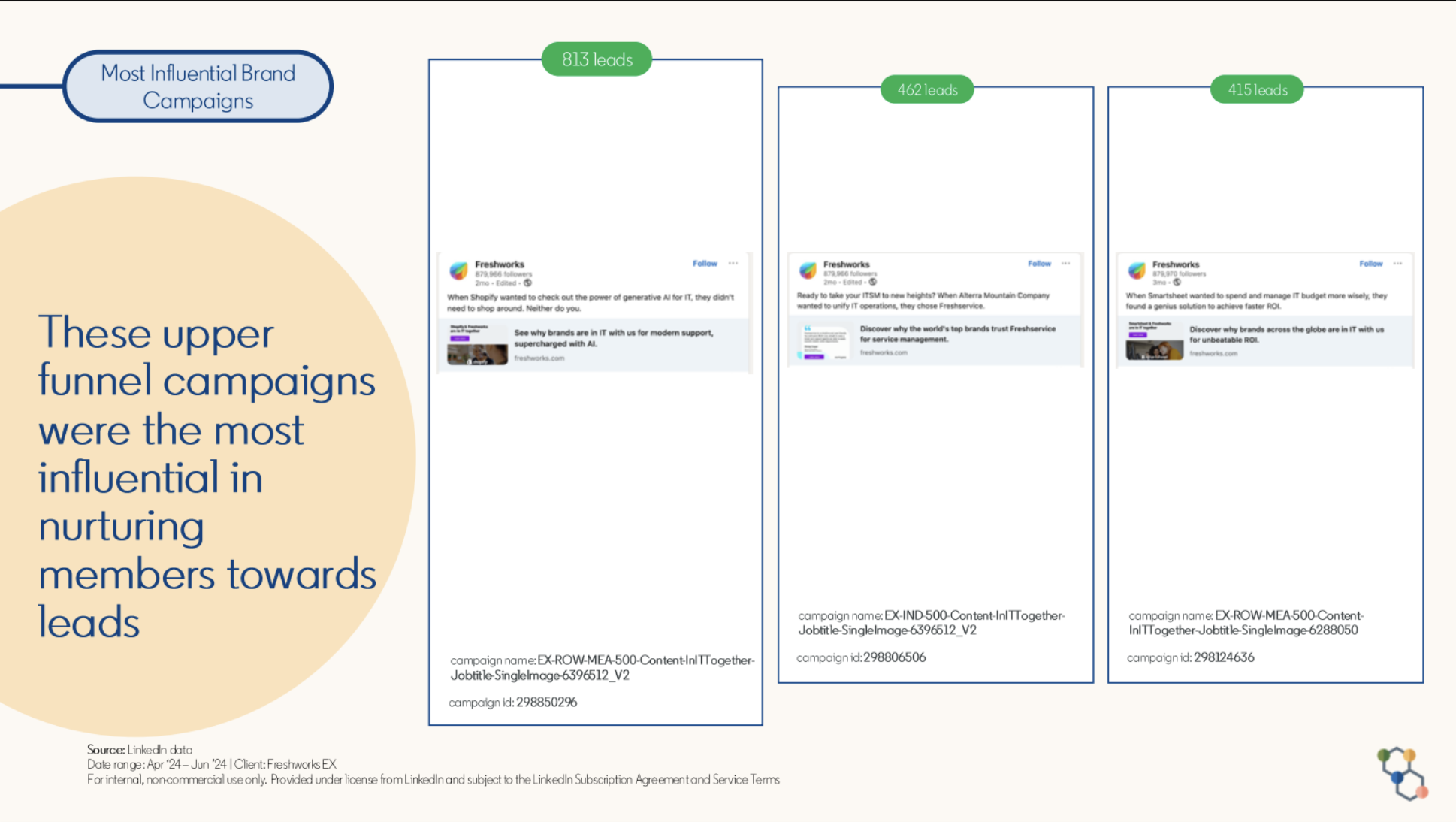
Upper-funnel customer-proof campaigns gave buyers a point of view and evidence before they encountered lower-funnel offers. The analysis showed these campaigns were the most influential in nurturing members towards leads.
3. Measure the cross-funnel effect
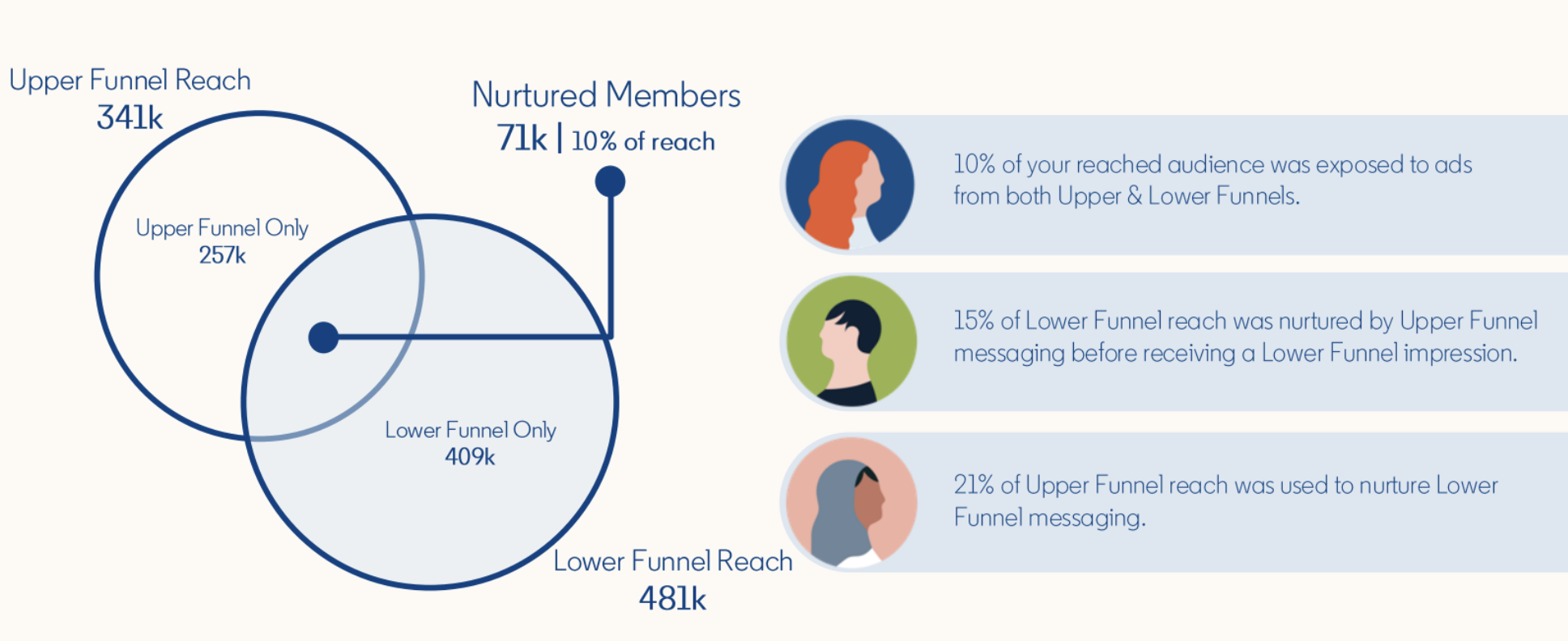
The audience-overlap assessment made the interaction visible: 71K members were nurtured across the journey, 10% of reached audiences saw both upper- and lower-funnel advertising, and 15% of lower-funnel reach had first been nurtured by upper-funnel messaging.
06
Commercial movement
The LinkedIn brand-to-demand playbook reduced cost per lead by 25% and improved MQC-to-SAL conversion by 40%.
The deeper analysis also changed the measurement conversation: brand could be evaluated as a multiplier of demand conversion and velocity, not merely as a soft prelude to performance marketing.
07
Reflection
Brand and demand are not separate stages owned by separate teams. They are interacting conditions in the same buying journey. The analytical breakthrough was to ask whether earlier exposure improved the channels that received conversion credit.